Artificial intelligence depends on physical infrastructure. Data centers require enormous amounts of reliable electricity, and that power has to be transmitted, distributed, protected, switched and monitored before it reaches the servers.
As AI-driven computing expands, utilities and infrastructure providers are being forced to increase grid capacity and invest in more advanced distribution systems. The impact reaches well beyond generation and transmission. It is also increasing demand for circuit protection, insulation, switching, metering, automation and grid-control technologies.
For TecTriu, this growth fits directly into a broader electrification cycle, where rising power demand and increasingly complex electrical networks require dependable, high-performance components across the entire system.
Why AI Infrastructure Is an Electrical Infrastructure Story
AI infrastructure is discussed in terms of computing power, chips and data centers, but none of those systems can operate without a dependable electrical network behind them. Every increase in computing capacity creates additional demand for power that must be transmitted, distributed, protected, switched, controlled and monitored before it reaches the equipment inside a data center.
At scale, that makes AI growth an electrical infrastructure issue as much as a technology issue. The expansion of AI is creating larger and more demanding loads on power networks, increasing the need for grid capacity, distribution equipment, protection systems, automation and smarter control technologies throughout the electrical system. At the AI scale, digital growth therefore becomes a physical infrastructure challenge.
That connection is becoming increasingly visible across the energy industry.
A June 2026 report from Lawrence Berkeley National Laboratory describes how the rapid growth of data centers and other large electrical loads is creating new grid-connection bottlenecks in the United States and forcing utilities, regulators and infrastructure developers to find new ways of bringing very large loads onto the grid faster.
At the equipment level, Siemens Smart Infrastructure reported around €6 billion of data-center orders in the first nine months of fiscal 2026, with triple-digit order growth. Siemens has explicitly described electrical distribution, monitoring and control equipment as part of the backbone required by AI-ready data centers.
Legrand provides another indication of the scale of the transformation: data centers represented 24% of Group sales in the first half of 2025, as demand accelerated across electrical and digital infrastructure.
The underlying sequence is becoming increasingly clear:
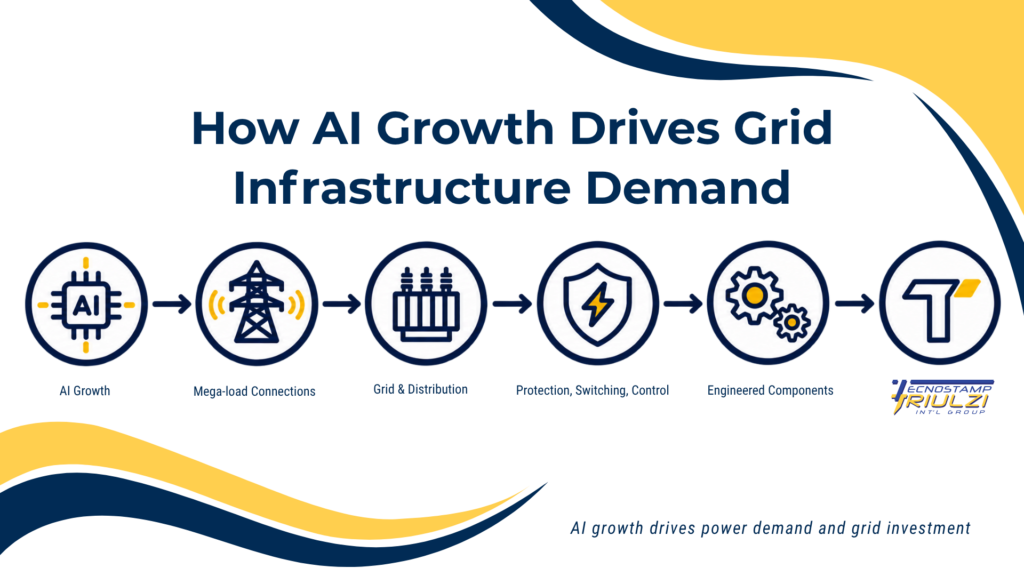
How AI Data Centers Consume Electricity
AI data centers concentrate enormous computing activity in one location, which makes electricity supply a core engineering requirement. Power has to move from the grid through distribution equipment, switching systems, circuit protection, metering and control infrastructure before it can support the computing equipment inside the facility. As data centers grow larger and computing becomes more power intensive, the electrical systems supporting them have to carry higher loads while maintaining insulation, thermal resistance, dimensional stability and long-term reliability.
The effect extends beyond the data center itself. Large new loads place additional demands on transmission and distribution networks, creating a need for greater grid capacity and more sophisticated monitoring and control. TecTriu operates within this electrical infrastructure rather than in the servers or computing hardware. Tectriu manufactures engineered components used in electrical distribution, circuit protection, industrial automation, metering and smart-grid systems. Our thermoset capabilities are particularly relevant where electrical insulation, heat resistance, structural performance and dimensional stability are required.
Why Computing Growth Creates New Electrical AI Infrastructure Demand
As computing capacity expands, electricity demand grows with it. Larger data centers place concentrated loads on the grid, increasing the need for transmission, distribution, switching, protection, metering and control infrastructure. That means computing growth does not stop at servers and processors; it drives investment across the electrical systems required to deliver and manage power reliably at scale.
In July 2026, the European Commission introduced an indicative target for electricity to reach 46% of final energy consumption by 2040, compared with a 32% reference for 2030. The Commission estimates that reaching this level of electrification could reduce Europe’s fossil-fuel import bill by approximately €260 billion per year.
With thermoset compression and injection molding, including BMC/SMC applications, in-house tooling, process engineering and manufacturing in Italy, Romania and Mexico, TecTriu supplies the physical components that help electrical equipment manage, protect and control the power required by increasingly demanding infrastructure.
How AI Data Centers Are Changing Electricity Demand
AI data centers are adding a new class of large, power-intensive loads to electrical networks. Unlike traditional demand growth, these facilities can require substantial capacity in concentrated locations, increasing pressure on grid connections and distribution systems. As more AI infrastructure comes online, utilities and equipment manufacturers must support higher loads with expanded distribution capacity, protection, switching, monitoring and control systems. This is helping push electricity demand from a gradual growth story into a broader infrastructure investment cycle.
AI Is Accelerating a Broader Electrification Cycle
AI is not creating the electrification cycle on its own, but it is accelerating it. Transportation, buildings, industrial systems and energy networks are already becoming more dependent on electricity. AI adds another major source of demand through large, power-intensive data centers that require substantial grid and distribution capacity. As these loads grow, investment must extend beyond generation into transmission, distribution, protection, switching, monitoring and control. For manufacturers such as TecTriu, this expands demand for the engineered components used throughout modern electrical infrastructure.
What Electrical Infrastructure Does an AI Data Center Require?
AI data centers depend on a layered electrical system that can move, protect, measure and control large amounts of power reliably. The infrastructure extends from the grid connection through distribution, switching, circuit protection, insulation, metering and control systems. As computing loads increase, each part of that system becomes more important to maintaining performance, safety and continuity.
Power Distribution Systems
Power distribution systems carry electricity from the grid to the equipment inside the data center. As AI workloads increase, these systems must support larger and more concentrated electrical loads. That places greater demands on distribution equipment and the engineered components used throughout the power path. TecTriu has long-standing experience manufacturing components for electrical distribution applications.
Circuit Protection and Switching
High electrical loads require systems that can safely switch, isolate and protect electrical circuits. Circuit protection and switching equipment help manage power flow while reducing the risk of damage when faults or abnormal conditions occur. TecTriu manufactures engineered components for circuit protection and related electrical applications, including systems where reliability and electrical insulation are critical.
Electrical Insulation
Electrical insulation is essential wherever high-current power paths and electrical components operate in close proximity. Materials used in these systems must maintain their performance under heat, mechanical stress and long operating cycles. TecTriu’s thermoset capabilities address these requirements through materials that can provide electrical insulation, thermal resistance, dimensional stability and structural performance.
Monitoring and Control Systems
Modern data centers require more than power delivery. They also depend on systems that can monitor electrical conditions and control how power is distributed throughout the facility. As electrical networks become more complex, monitoring and control help make those systems more responsive and manageable. TecTriu’s experience in industrial automation and smart-grid applications supports this shift toward more intelligent electrical infrastructure.
Metering and Smart-Grid Connectivity
Metering provides visibility into electricity use, while smart-grid technologies add sensing, communication and electronic control to traditional power infrastructure. These capabilities become increasingly important as grids absorb large new loads such as data centers. TecTriu has experience in metering-related applications and smart-grid disconnectors where electrical insulation and high-current power paths operate alongside sensing and communication technologies.
The Engineered Components Behind AI Power Infrastructure
AI power infrastructure depends on a wide range of engineered components that sit inside distribution, protection, switching, metering and control systems. These parts must perform reliably under demanding electrical and thermal conditions while maintaining insulation, structural integrity and dimensional stability. TecTriu supports this part of the value chain through thermoset molding, in-house tooling, process engineering, series manufacturing including BMC/SMC processing. Its role is not to build the data center itself, but to manufacture the high-performance components that help electrical equipment distribute, protect, monitor and control the power those facilities require.
Why Thermoset Materials Matter in Electrical Infrastructure
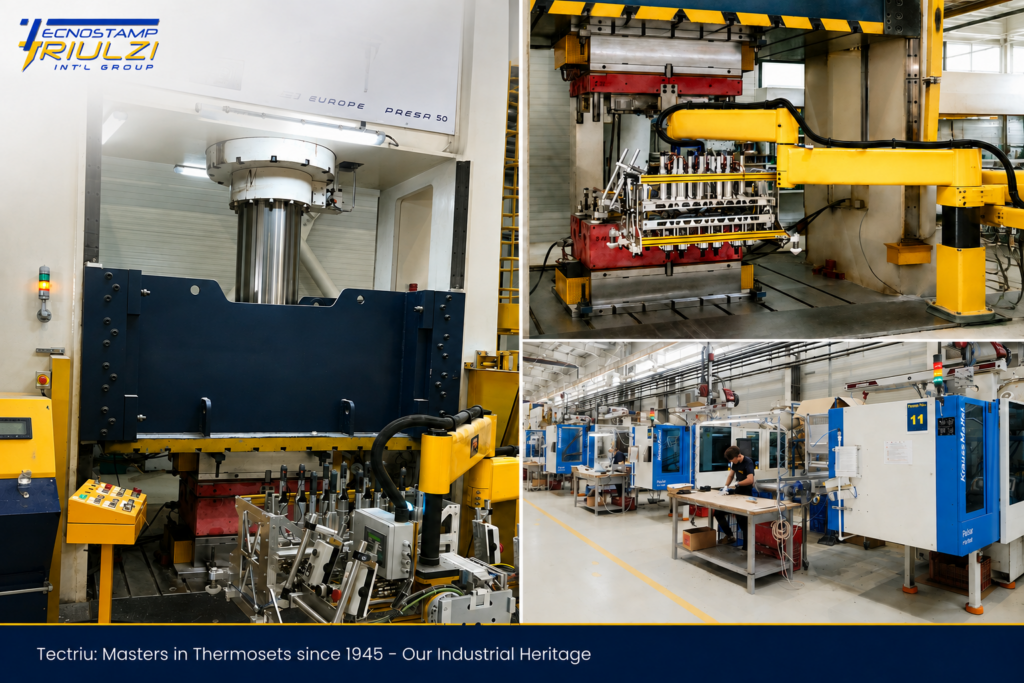
Thermoset materials are well suited to electrical infrastructure because they can combine several demanding performance requirements in a single component. Depending on the application, they can provide electrical insulation, thermal resistance, dimensional stability, structural strength and long-term reliability. Their performance, however, depends on more than the material itself. Component geometry, mold design, temperature, pressure, curing behavior and process control all influence the finished part. TecTriu brings this together through thermoset compression and injection molding, including BMC/SMC applications, supported by in-house tooling, process engineering and series manufacturing.
How Thermoset Electrical Components Are Manufactured
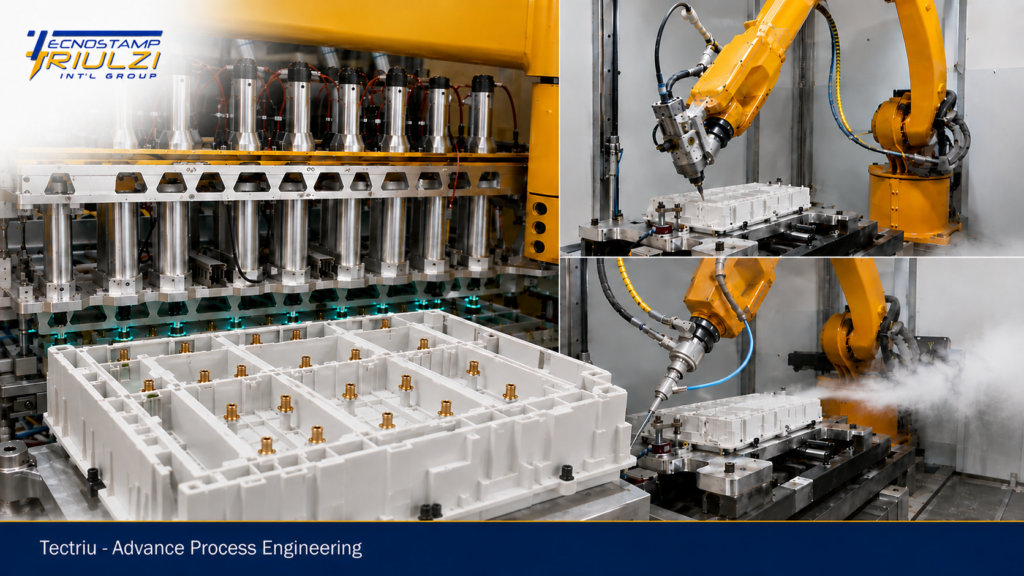
Manufacturing thermoset electrical components requires tight control over the full production process. Material selection, component geometry, mold design, temperature, pressure and curing behavior all affect the performance of the finished part. TecTriu combines thermoset processing with in-house tooling, process engineering, industrialization and series manufacturing so performance and production requirements can be addressed together.
Thermoset Compression Molding
Thermoset compression molding is one of the core processing capabilities within TecTriu’s manufacturing platform. A measured amount of material is placed directly into an open heated mold, then the mold closes and compresses it. Thermoset compression molding is used as part of a broader engineered process that considers material behavior, mold design and the operating requirements of the finished electrical component.
Thermoset Injection Molding
TecTriu also manufactures thermoset components through injection molding. Material is injected under pressure into a closed heated mold. As with compression molding, the final quality of the part depends on controlling the interaction between the material, tooling, geometry and processing conditions throughout production.
BMC/SMC Applications
TecTriu’s thermoset capabilities include both BMC/SMC applications. These materials form part of the company’s broader thermoset manufacturing expertise for electrical components that may require insulation, thermal resistance, dimensional stability and structural performance.
Why Tooling and Mold Design Matter
Tooling is a critical part of thermoset manufacturing because mold design directly affects how a component is formed and how consistently it can be produced. TecTriu supports this process with in-house tooling, allowing mold development and process engineering to be considered together during industrialization.
Controlling Temperature, Pressure and Curing Behavior
Thermoset processing depends on precise control of temperature, pressure and curing behavior. These variables interact with the material, part geometry and mold design, and the final performance of the component depends on maintaining control across the complete process.
Designing Components for Manufacturability at Scale
TecTriu works with customers early in the development process to address both component performance and manufacturability. This allows engineers to consider how a part will function as well as how it can be produced reliably and competitively in series manufacturing. That approach becomes increasingly important as electrical systems move toward higher power densities, longer operating cycles and more demanding environments.
AI Growth Is Driving the Need for Smarter Electrical Grids
AI growth is increasing the need for electrical grids that can do more than simply deliver power. Modern networks must accommodate renewable generation, distributed energy resources, batteries, electric vehicles and large new consumers such as data centers. That requires greater visibility and control across the system, with more sensing, communication, monitoring and automation built into the grid.
TecTriu’s experience in smart-grid disconnectors and metering-related applications reflects this shift, combining electrical insulation and high-current power paths with sensing, communication and electronic control. As power demand becomes more complex, these capabilities will play a larger role in how electricity is managed across modern infrastructure.
What Is a Smart Grid?
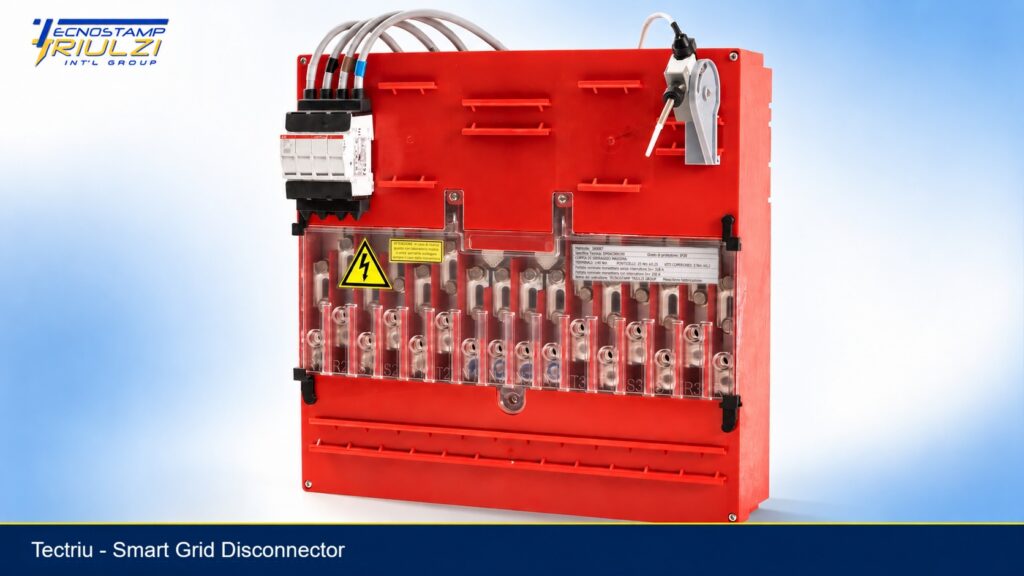
A smart grid is an electricity network that uses digital monitoring, sensing, communication and control technologies to manage power more dynamically. Traditional grids were largely designed around predictable, one-way electricity flows.
Modern networks must handle renewable generation, batteries, electric vehicles, distributed energy resources and large consumers such as data centers. That requires a grid that can respond to changing conditions, monitor electrical activity and coordinate power across a more complex network.
TecTriu supports this transition through experience in smart-grid disconnectors and metering applications that combine high-current power paths and electrical insulation with sensing, communication and electronic control.
TecTriu’s Role in the AI and Electrification Supply Chain
TecTriu operates within the physical supply chain behind electrification. The company does not build data centers or power networks. It manufactures engineered components used inside the electrical distribution, protection, automation, metering and smart-grid systems that support them. As AI data centers and other large electrical loads drive greater investment in power infrastructure, these established capabilities place TecTriu within a growing industrial market for reliable electrical components.
Engineered Components for Electrical Distribution
TecTriu manufactures engineered components for electrical distribution, circuit protection, industrial automation, metering and smart-grid applications. These are the systems responsible for moving, protecting, measuring and controlling electricity as it travels through modern power infrastructure. Increasing electrical loads create additional demand for these systems and the components used within them.
Thermoset Expertise Dating Back to 1945
Thermoset materials have been part of TecTriu’s industrial experience since 1945. Their properties are particularly relevant to demanding electrical applications where components may need electrical insulation, thermal resistance, dimensional stability, structural performance and long-term reliability. Decades of experience also provide an understanding of how material behavior, component design and manufacturing conditions affect finished-part performance.
Engineering, Tooling and Industrialization Capabilities
TecTriu combines thermoset compression and injection molding, including BMC/SMC applications, with in-house tooling, process engineering and industrialization. Working with customers during development allows its engineers to consider component performance and manufacturability at the same time. The objective is to develop parts that meet their technical requirements while remaining reliable and competitive in series production.
Manufacturing in Italy, Romania and Mexico
TecTriu’s manufacturing operations span Italy, Romania and Mexico, positioning production close to major European and North American markets. This footprint combines engineering expertise with scalable manufacturing capacity and allows the company to support international customers as electrical product platforms move from development into series production.
Scaling Electrical Components for the Next Infrastructure Cycle
TecTriu has invested in manufacturing capacity, automation, tooling and specialized processing technologies across the Group. Those capabilities are already in place as customers face a new period of investment in electrification and power infrastructure. Rather than building a manufacturing platform specifically for this market cycle, TecTriu can use its existing industrial base to increase production alongside customers while continuing to invest as electrical technologies and product requirements develop.
Frequently Asked Questions About AI and Electrical Infrastructure
How Much Electrical Infrastructure Do AI Data Centers Require?
AI data centers require extensive electrical infrastructure because large computing loads must be connected to the grid, distributed throughout the facility, protected, switched, monitored and controlled. As facilities increase in size and computing density, the supporting electrical systems must handle higher loads while maintaining reliability and continuity.
Why Does AI Increase Electricity Demand?
AI increases electricity demand because greater computing capacity requires more power. Every expansion in servers, accelerated-computing platforms and data-center capacity creates additional electrical load, which must be supplied by the surrounding grid and distribution network.
Around 40% of Europe’s distribution grids are more than 40 years old, while the European Commission estimates that approximately €730 billion of investment in distribution networks and €477 billion in transmission networks could be required by 2040.
This makes electrification a multi-decade infrastructure investment cycle.
AI is accelerating that cycle by adding a new category of large, power-intensive and mission-critical loads.
What Electrical Components Are Used in Data Centers?
The electrical systems supporting data centers rely on components used in power distribution, circuit protection, switching, insulation, metering, automation, monitoring and control. TecTriu manufactures engineered components for several of these applications, including electrical distribution, circuit protection, industrial automation, metering and smart-grid systems.
How Does AI Affect the Power Grid?
AI data centers add large, concentrated electrical loads to power networks. This can increase pressure on grid connections and accelerate the need for additional transmission, distribution and control infrastructure. As these loads grow, grids also need greater monitoring, digitalization and flexibility.
Why Are Thermosets Used in Electrical Components?
Thermoset materials can provide a combination of electrical insulation, thermal resistance, dimensional stability, structural performance and long-term reliability. These properties make them useful in demanding electrical applications where components must maintain their performance under heat, electrical stress and extended operating conditions.
What Is the Role of Smart Grids in AI Infrastructure?
Smart grids help power networks manage increasingly complex electrical demand. By combining sensing, communication, monitoring and electronic control, they allow the grid to respond more effectively to large consumers such as data centers alongside renewable generation, batteries, electric vehicles and distributed energy resources.
How Do Electrical Component Manufacturers Support Data Center Growth?
Electrical component manufacturers support data-center growth by supplying the parts used in distribution, protection, switching, insulation, metering and control systems. TecTriu adds engineering, tooling, thermoset processing, industrialization and series manufacturing capabilities, allowing components to move from development into scalable production as infrastructure demand increases.